Wooden Jeep Puzzle – Vocabulary & Visual Attention Tool
Wooden Jeep Puzzle – Vocabulary & Visual Attention Tool
Couldn't load pickup availability
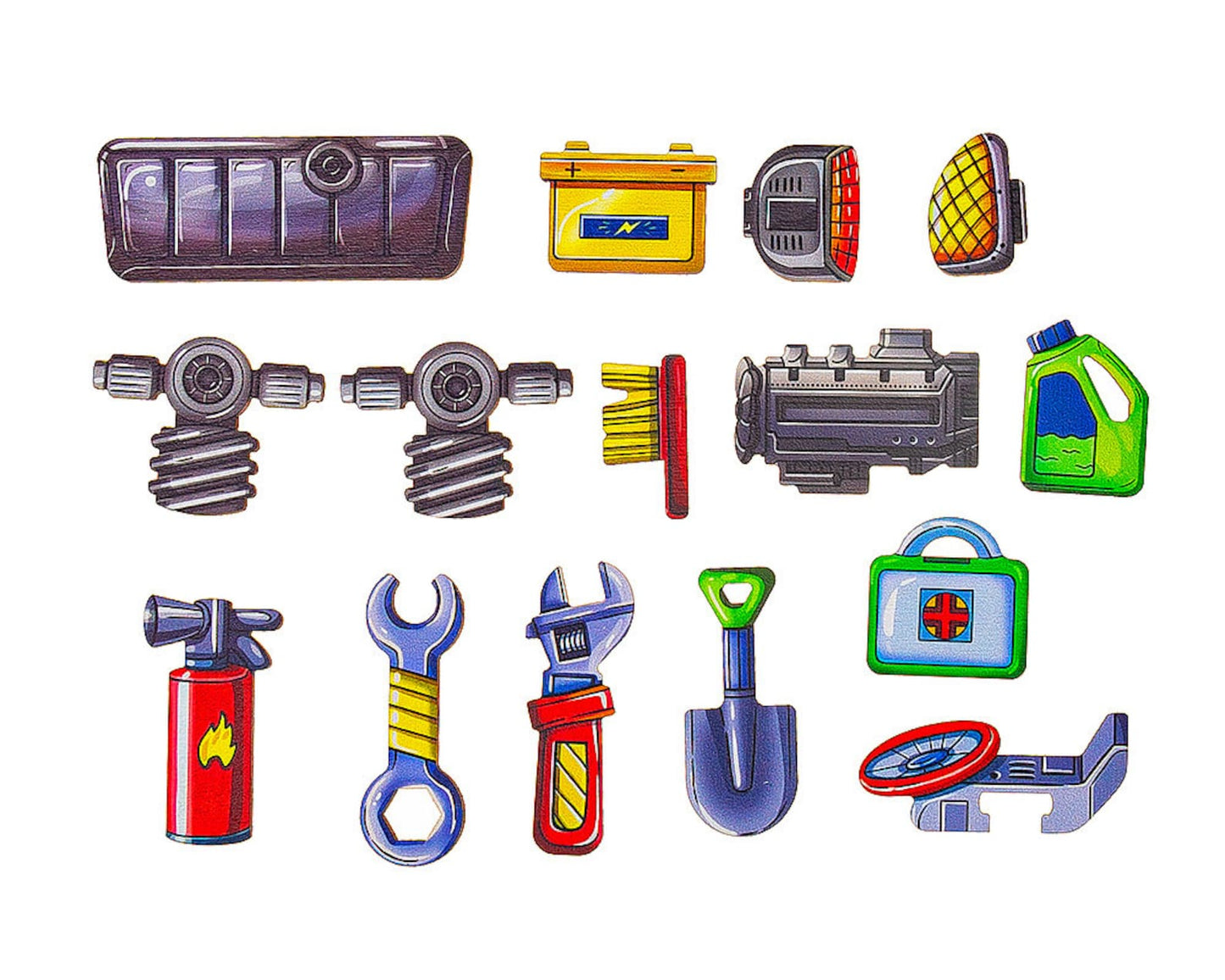
A layered plywood jeep that comes apart into puzzle pieces and goes back together inside its frame. What makes it useful is not the assembly — it is everything you can talk about while the pieces are out on the table.
Most puzzles give a child one task: find where this goes. This one gives you a vocabulary lesson, a memory game and a storytelling exercise using the same set of pieces, which is why speech and language therapists reach for material like this rather than a picture book.
Three ways to work with it
- Look what's inside. Name the parts of the vehicle together — steering wheel, engine, battery, suspension, fuel tank, headlights — and say what each one does. Then look at what the jeep carries: first aid kit, canister, shovel, fire extinguisher, brush, spare tyre. Ask why a driver needs each. A child who can explain the purpose of a thing remembers its name.
- Car mechanic. Where do people repair cars, and what is that person called? Take all the pieces out and let the child "fix" the jeep by fitting every piece back into the frame. Framing the task as a job rather than a puzzle keeps a reluctant child at the table.
- Road stories. Split the pieces between you. Take turns placing one and adding a single sentence to a story about where the jeep is going. This is narrative practice — sequencing, cause and effect, holding a thread — and it is the hardest of the three.
What it develops
Vocabulary and naming, narrative language, visual attention and perception, working memory, hand-eye coordination, and the fine motor control of placing a piece precisely into its recess.
Specifications
- Puzzle size: 32,5 × 23 cm
- Material: painted plywood
- For adult-led work: assembling the frame suits a child from around three, the naming games from three to four, storytelling from four
A tool for sessions at the table with you, not something to hand over and walk away from. Speech therapists, occupational therapists and special educators use material like this with children who have language delays, ASD or ADHD.
Share