

Boris Nikitin was a Soviet teacher who built a set of wooden puzzles in the 1960s around one idea: a child should see the whole problem at once and solve it with their hands, rather than be told the answer. The Fold Square is the best known of them.
-
Nikitin Fold Square – Level 1 Spatial Reasoning Therapy Tool
Regular price €28,00Regular price -
Nikitin Fold Square – Level 2 Spatial Reasoning Therapy Tool
Regular price €28,00Regular price -
Nikitin Fold Square – Level 3 Advanced Spatial Reasoning Tool
Regular price €28,00Regular price

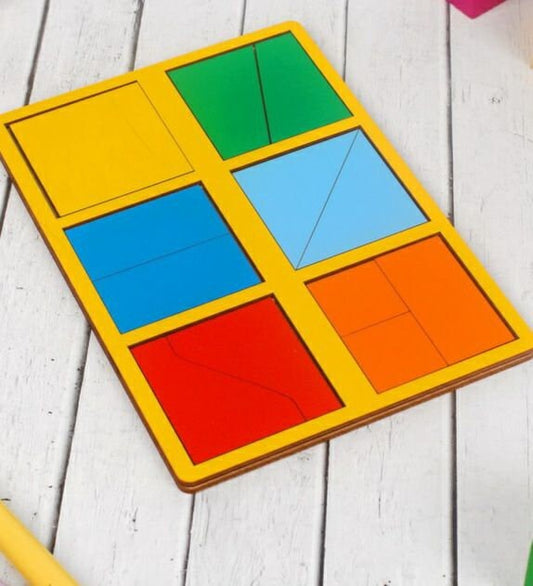


A square is cut into pieces. The pieces are laid out flat, and the child folds them back into a square. There's no picture to copy and no single correct route, so a child who gets stuck has to try another arrangement instead of looking to an adult for the next step.
Three levels sit here. Level 1 has few cuts and works from around 18 months, with an adult turning pieces over alongside the child. Level 2 adds cuts and diagonals. Level 3 is the one adults get stuck on.
The material has been used in classrooms and therapy rooms for over fifty years, for spatial reasoning, planning, and the patience to stay with a problem that isn't solved yet. More on where the method came from and how to work with it in our guide to the Nikitin method.