

-
Wooden Montessori Christmas Tree Set — Math & Creative Arts Toy
Regular price €19,25Regular price -
Wooden New Year Stick Puzzles — 6-in-1 Holiday Puzzle Set
Regular price €31,17Regular price€15,00Sale price €31,17 -
Montessori Sorting Therapy Set – Fine Motor & Cognition | 6M+
Regular price €37,00Regular price -
Color & Logic Sorting Tool – Montessori Therapy Toy for SEN
Regular price €26,00Regular price -
Rainbow Basket Egg Puzzle – Color Therapy Tool for Toddlers
Regular price €18,00Regular price -
Color Sorting Chest of Drawers – Tactile Therapy Tool | SEN
Regular price €41,00Regular price -
Montessori Egg Puzzle – Size Sorting & Color Therapy Tool 1.5+
Regular price €14,00Regular price


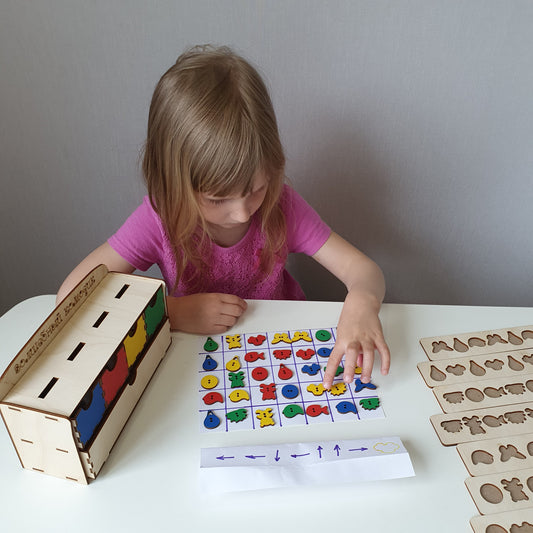


Wood, texture and weight instead of batteries and flashing lights. Every tool on this page gives a child sensory input they choose and control themselves: a drawer that slides open, a button that drops into place, a piece that clicks when it finds its slot. Nothing here competes for a child's attention, which is why it can hold it.
These are the materials occupational therapists keep in sensory integration rooms, and the same ones SEN classrooms and home sensory diets are built around. They suit children with autism, ADHD, sensory processing differences and developmental delay, and they work just as well for a child who simply needs their hands busy before they can settle.
Choose by what the child needs
Seeking touch and pressure. The Color Sorting Chest of Drawers holds sixty-four buttons across four drawers, so the same posting motion repeats for as long as the child wants it. The Montessori Sorting Therapy Set gives heavier pieces and a deeper drop.
Needs the outcome to be the same every time. The Rainbow Basket Egg Puzzle has eight eggs and eight slots. One piece, one place, one click. For a child who finds uncertainty hard, that predictability is the whole point.
Coming down after overload. The Color & Logic Sorting Tool asks for one decision at a time and has a visible end. A task that finishes gives a dysregulated child somewhere to land.
Hands that need precise work. The Montessori Egg Puzzle pairs each chick with the one egg it fits, so fingers have to aim rather than sweep. Children often start narrating who lives where, which makes it useful for speech too.
Ready for a longer, harder task. The New Year Stick Puzzles hide six pictures in the same eight sticks. The child has to turn and reorder until the image resolves, which asks for sustained attention rather than a quick match.
What to look for in a sensory tool
Three things decide whether a material calms or adds to the noise. It should engage one sense at a time, so a child who is already flooded isn't asked to process sound and light on top of touch. The result should be predictable, because a piece that behaves differently each attempt teaches a child not to trust the material. And the task needs a visible end, so the child can see that finishing is possible.
Working with it
Sit alongside rather than opposite, show the motion once with your own hands, then leave silence. Most adults fill that silence and interrupt the concentration they were trying to build. Let repetition run: the twentieth button is doing the same regulating work as the first, even when it looks like nothing new is happening.
Suitable from around six months with an adult close by, with the harder sorting and puzzle work coming in later. These are tools for adult-led sessions, not toys to hand over and walk away from.