Montessori Sorting Therapy Set – Fine Motor & Cognition | 6M+
Montessori Sorting Therapy Set – Fine Motor & Cognition | 6M+
Couldn't load pickup availability
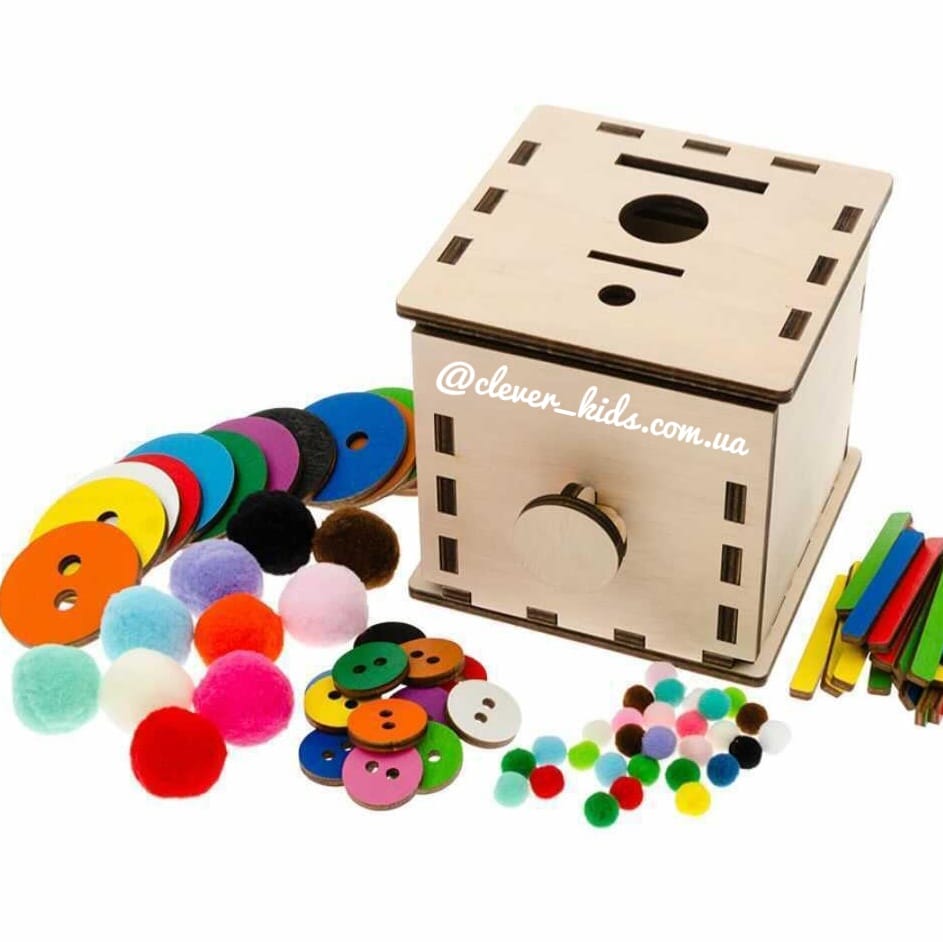
A box of loose parts in graded sizes: pom-poms at one centimetre and three, buttons at two and a half and five, wooden sticks at seven. The sizes are the point. Nothing in the box is decorative, and every pair of objects differs on one property clearly enough that a child can see the difference before they can name it.
What the set asks of a child changes completely over three years. At six months the task is watching a ball disappear into the box and come back out, which is object permanence. At two it is putting all the small pom-poms in one place and the large ones in another, which is categorisation. At three it is sorting on two properties at once. Same box, three different jobs, which is why it turns up in early intervention rooms and occupational therapy caseloads rather than a toy shelf.
Ways to use it with a child
- Drop and retrieve. Put one object in, let the child fish it back out. The pause between disappearing and reappearing is where the learning sits, so do not rush to reveal it.
- Sort by one property. Two bowls, large in one, small in the other. Say the rule out loud once, then stop talking and let the child work out the borderline cases themselves.
- Sort by two properties. Large red in one bowl, small red in another, large blue in a third. This is the first task in the box that can genuinely be got wrong, which is what makes it useful.
- Transfer with a pinch. Move pom-poms one at a time with thumb and forefinger rather than a scoop of the hand. Slower, harder, and the whole point if you are working on grip.
- Count a sorted group. Once objects are grouped, count the group. Sorting first gives a child something stable to count, which is why the order matters.
- Build with the sticks. Twenty sticks of the same length make squares, triangles and grids on a flat surface, a quiet bridge into shape work.
- Hide and find. Bury a button under the pom-poms and let the child dig for it by touch alone, with eyes closed or the box behind their back.
What it develops
Pinching, releasing and transferring build the hand for a pencil later. Grouping by a property is the reasoning underneath early maths, and the two-property version is genuine logical work. The set also asks for sustained attention: sorting eighty-four objects takes longer than a child expects, and finishing is part of the exercise.
Specifications
30 small pom-poms (1 cm) · 10 large pom-poms (3 cm) · 12 medium buttons (2.5 cm) · 12 large buttons (5 cm) · 20 wooden sticks (7 cm). Wood and textile, non-toxic finish.
For adult-led work: drop-and-retrieve suits a child from around six months, sorting on one property from around 18 months, and two properties at once from around 3. Small parts throughout, so this is a tool for sessions with an adult present, not a box to hand over and walk away from.
Share