Rainbow Egg Puzzle – Part-Whole & Size Sorting Tool | 13pc
Rainbow Egg Puzzle – Part-Whole & Size Sorting Tool | 13pc
Couldn't load pickup availability
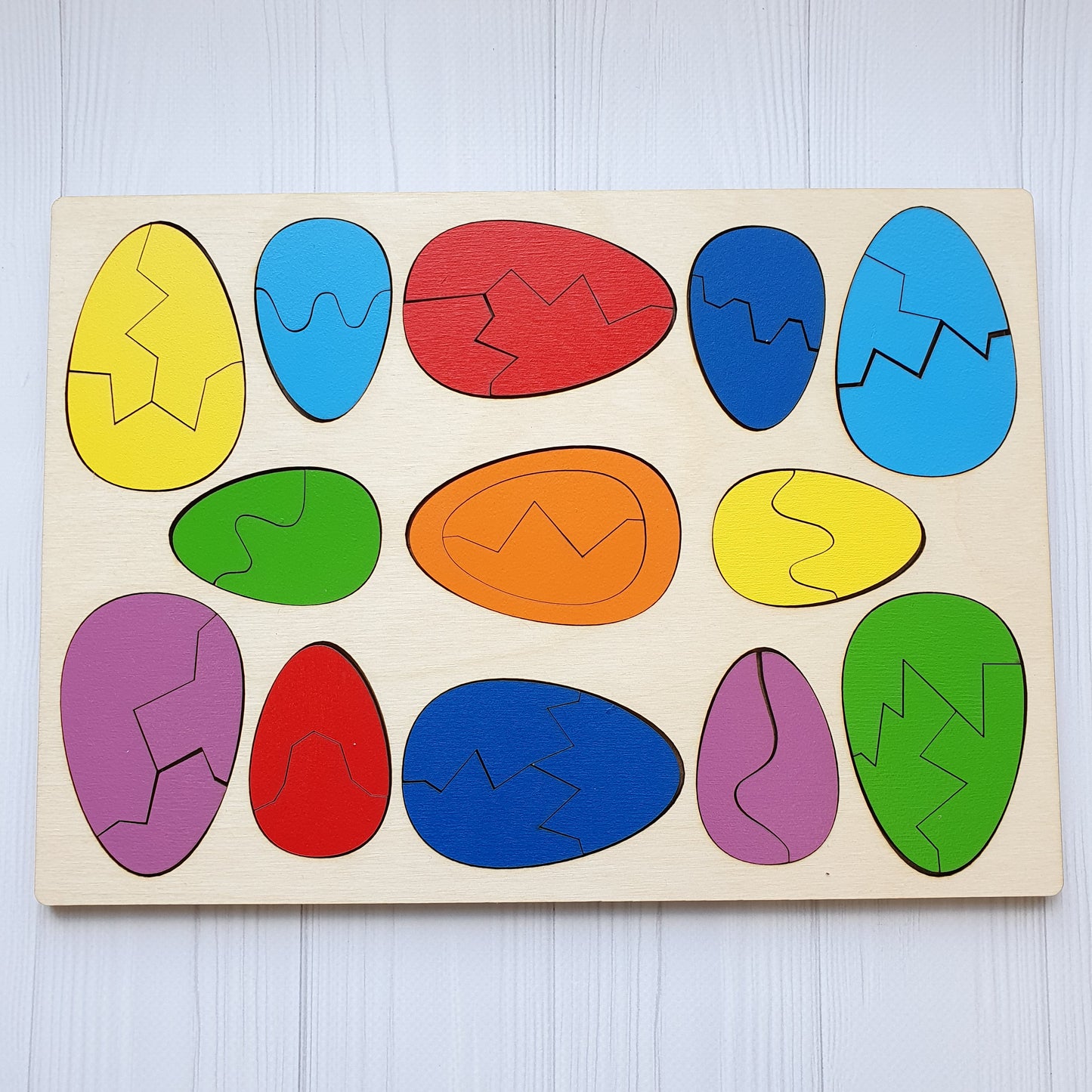
A plywood tray with thirteen egg-shaped sockets and thirteen eggs to fill them. The eggs come in two sizes, and each one is cut into two or three pieces, so a finished tray means holding shape, size and colour in mind at the same time.
The split eggs are what makes this different from a first puzzle. A child slotting eight whole eggs into eight holes is matching, and matching is mostly recognition. The moment an egg arrives in three pieces, the task changes: the child has to keep an idea of the finished egg in mind while handling a fragment that looks like nothing on its own. That is part-whole reasoning, and it sits between recognising a shape and being able to plan with one.
Ways to use it with a child
- Start with the tray half full. Leave six or seven eggs in place and take the rest out. A tray emptied all at once is where a child decides the whole thing is too much.
- Sort the pieces before filling. Ask for all the halves of one colour first, before anything goes in the tray. Sorting turns a search into a system, and it slows the hands down enough for the eyes to work.
- Put big and small side by side. Hand over one large piece and one small piece of the same colour and ask which hole each belongs in. Two sizes is where comparison starts; a tray of identical eggs cannot teach it.
- Name the colour as it goes in. One egg, one colour word, said out loud while the hand moves. Naming after the fact does far less than naming during.
- Hold back one piece. Fill the tray together but keep a piece in your hand. Asking which one is missing, and what colour it is, turns a finished puzzle into a memory task.
- Tell the egg a story. Whose egg is this, who is inside, where did it go. A child who narrates while working uses longer sentences than one answering questions, which is why this material earns its place in speech and language sessions.
- Two people, one tray. You place one, the child places the next. Taking turns is harder than it looks and easier to practise on something with a clear end.
What it develops
Part-whole reasoning, comparing by size, colour naming, pincer grip and controlled placement, planning a sequence, and narrative language when the eggs get a story. Occupational therapists and Montessori teachers use trays like this because one material carries a fine motor goal and a thinking goal at once.
Specifications
- For adult-led work: filling with whole eggs suits a child from around 18 months, two-piece eggs from two, three-piece eggs and size sorting from three
- Thirteen eggs in two sizes, each cut into two or three pieces
- Tray: 30 × 21 cm · thickness 0.7 cm · weight 250 g
- Material: plywood, cut precisely enough that pieces drop in without being forced
- Small parts: keep an adult at the table with a child who still mouths pieces
Made in small batches, sanded by hand, finished with child-safe paint. This is a tool for adult-led sessions rather than something to hand over and walk away from. Worked through together, it suits a younger child than the pieces alone would suggest. If a child is still learning to match one whole shape to one hole, start with the simpler eight-egg Rainbow Basket and come back to this one.
Share