Wooden Bus Puzzle – Attention, Memory & Language Tool
Wooden Bus Puzzle – Attention, Memory & Language Tool
Couldn't load pickup availability
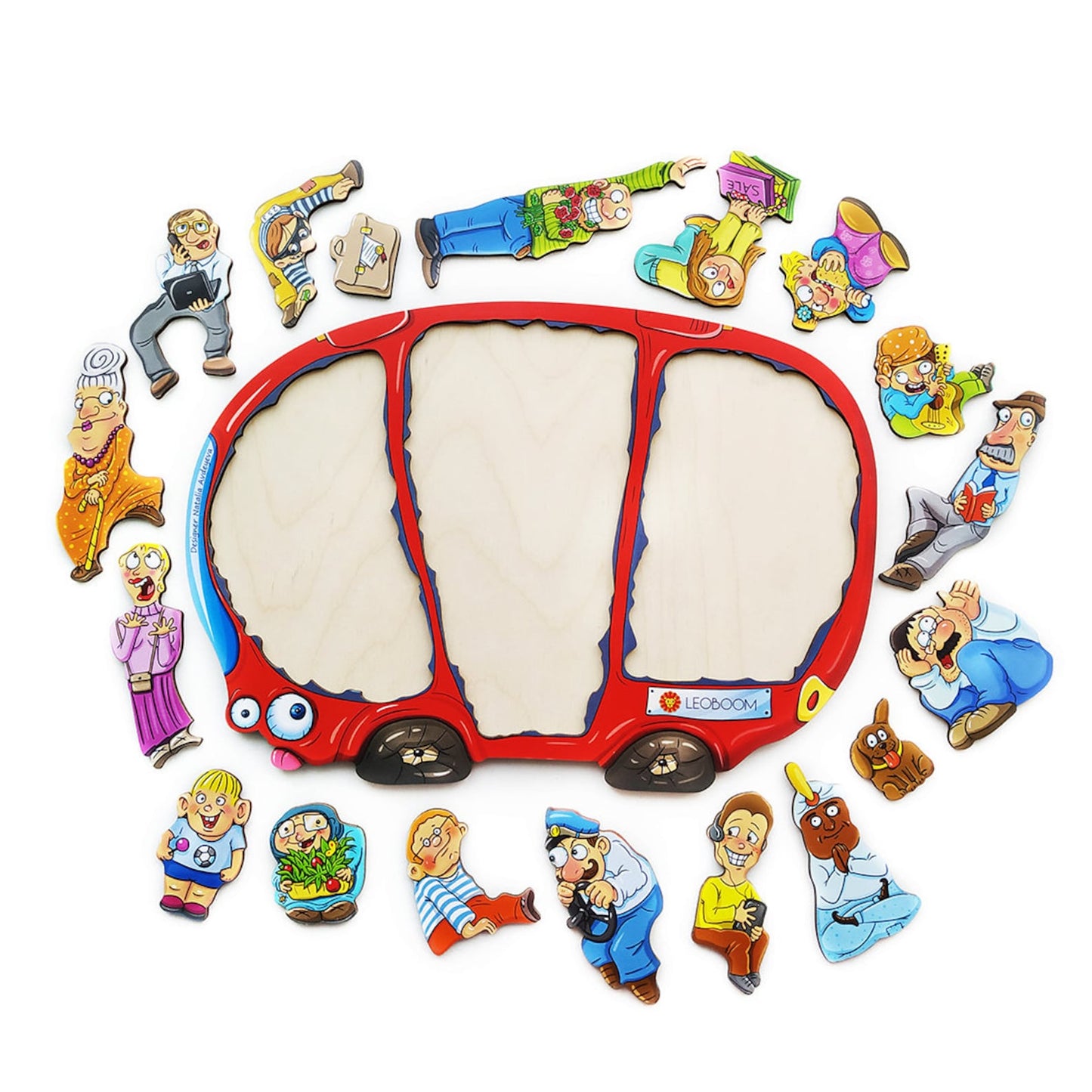
A plywood bus at rush hour, packed with passengers that lift out as separate figures. Every passenger is different — moustache, glasses, a book, a guitar, one animal among them, one riding without a ticket — and those differences are what the activities run on.
Five things come out of one set: a visual search game, a deduction game, two kinds of memory work, and storytelling. The child holds a figure while the language happens, which is why this sort of material works where a picture book stalls.
Five ways to work with it
- Find and count. How many passengers have a moustache? How many wear glasses? Which animal is on the bus? Then make it a race — who spots the passenger with the guitar first, or the one riding without a ticket. Searching for a named detail is much easier than producing the name, so this is where a child with a language delay can start winning.
- Yes or no. You pick one passenger in your head. The child works out who it is by asking questions you may only answer yes or no — "does he wear glasses?", "is she holding something?" This is deduction: narrowing down instead of guessing. Begin with four passengers, not the whole bus.
- Who left on the bus? Put seven to nine passengers in a row on the table — that is the bus stop. The child studies them, then turns away while you move one onto the bus. Which passenger left? Remembering who is missing is harder than noticing what moved, so start with four figures.
- Counting material. Count passengers on and off, into rows, into groups. Real objects moved into a real place teach one-to-one correspondence better than pictures on a page.
- Passenger stories. Take each figure in turn: give them a name, a character, a hobby, and decide where they are going and why. Funny stories work best. A child who refuses "tell me a story" often talks freely once the character is in their hand.
What it develops
Visual attention and search, deductive reasoning, working memory for both change and absence, early counting, vocabulary and narrative language, hand-eye coordination and fine motor control.
Specifications
- Puzzle size: 29 × 20,5 cm
- Material: painted plywood
- For adult-led work: finding and counting suits a child from around three, the yes-no and memory games from four, storytelling from four to five
A tool for sessions at the table with you, not something to hand over and walk away from. The deduction and memory games only work with an adult holding the answer.
Share