Wooden Boat Puzzle – Vocabulary, Memory & Logic Tool
Wooden Boat Puzzle – Vocabulary, Memory & Logic Tool
Couldn't load pickup availability
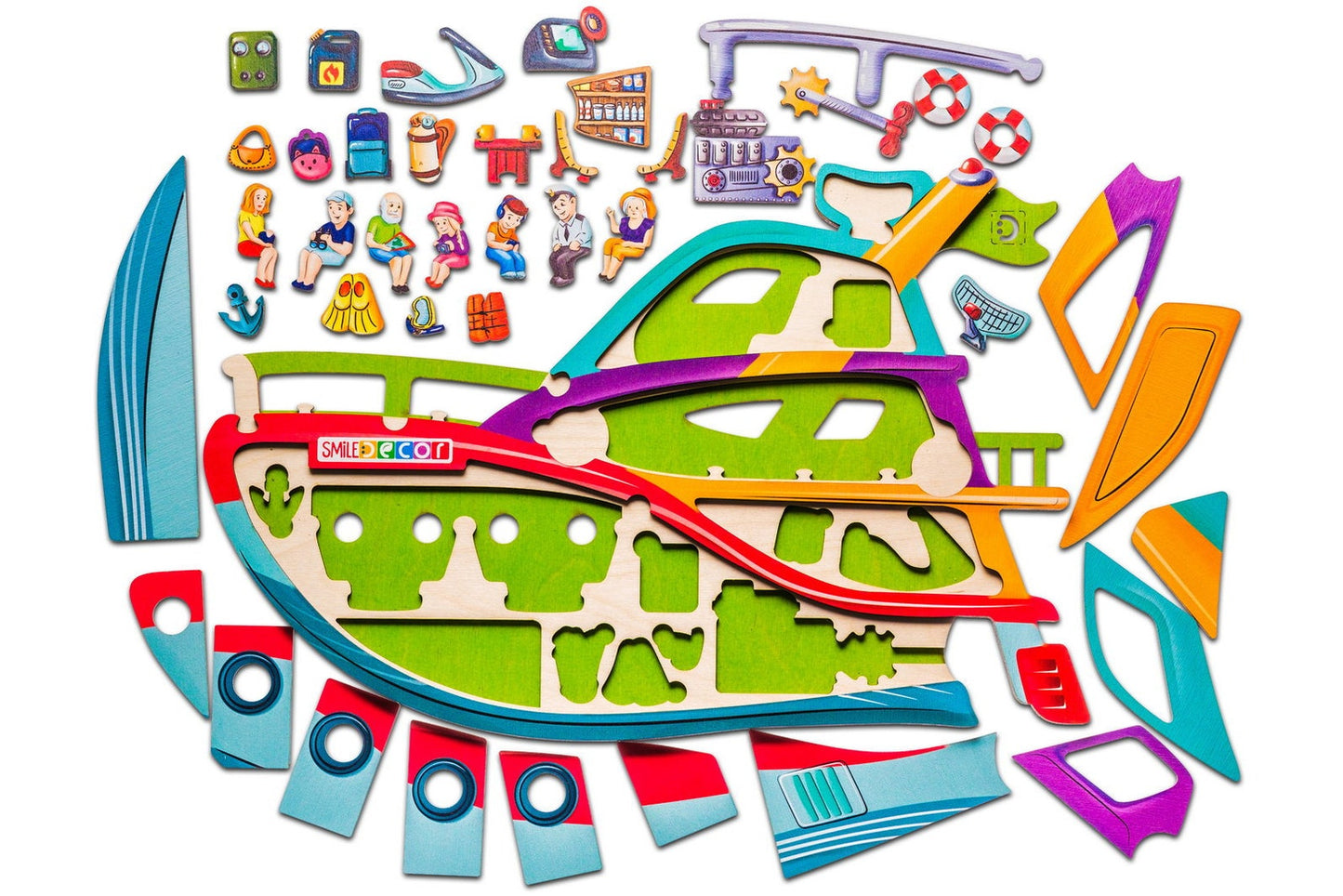
A layered plywood boat that comes apart into puzzle pieces and goes back together inside its frame. The assembly is the smallest part of what it does — the value is in what you and the child talk about while the pieces are out.
Five distinct activities come out of one set: naming parts, hunting for objects, comparing types of vessel, a memory game, and building a story. That range is why speech and language therapists use material like this instead of a picture book — the child has something in their hands while the language work happens.
Five ways to work with it
- On the boat. Name the parts together — captain's cabin, upper deck, stern, cabins, luggage compartment, engine, propeller, anchor — and say what each is for. Then look at who is on board and what they are doing. A child who can explain the purpose of a thing remembers its name.
- Nautical equipment. The boat is setting sail: ask the child, as captain, to find the radar, radio, lifebuoy, life jacket, diving gear, fuel supply, jet ski. Then discuss why each is needed on board. Searching for a named object is easier than producing the name, so this step often works before the first one does.
- Marine engineer. Study the assembly diagram together, then let the child fit every piece back into the frame. Afterwards ask for other kinds of water transport — boat, catamaran, yacht, tugboat, steamship, cruiser, submarine, cruise liner — and compare two of them. How are a small boat and a cruise liner alike, and where do they differ? Comparing is harder than naming and it builds the category thinking behind it.
- Passengers. Once the figures are seated, ask the child to remember where everyone is. They close their eyes, you swap two or three. What changed? Then have them put the passengers back. Start with three figures, not all of them.
- Sea adventures. Invent the captain and passengers together — a name, a character, what they do on board, where they dream of going. Then split the pieces, take turns placing one and adding a single sentence to the voyage. This is the hardest of the five: it asks for sequencing, cause and effect, and holding a thread.
What it develops
Vocabulary and naming, narrative language, visual attention and perception, working memory, logical thinking through comparison and categorisation, hand-eye coordination, and the fine motor control of placing a piece precisely into its recess.
Specifications
- Puzzle size: 35 × 23 cm
- Material: painted plywood
- For adult-led work: assembling the frame suits a child from around three, naming and searching from three to four, memory and comparison games from four
A tool for sessions at the table with you, not something to hand over and walk away from. Speech therapists, occupational therapists and special educators use material like this with children who have language delays, ASD or ADHD.
Share