Wooden Character Builder — Emotions & Expressions Puzzle
Wooden Character Builder — Emotions & Expressions Puzzle
Couldn't load pickup availability
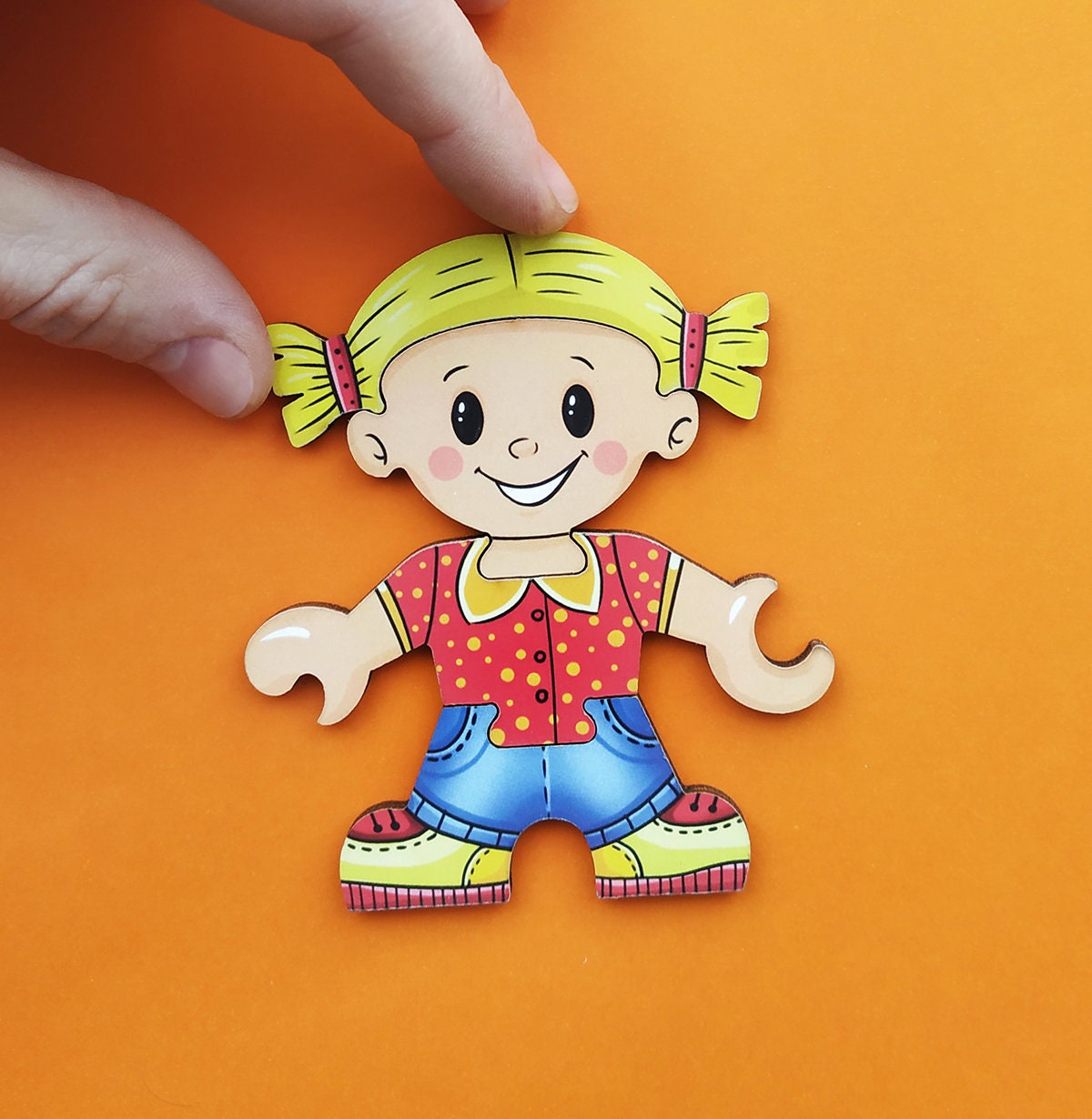
Interchangeable plywood pieces for building a figure: faces carrying different expressions, hairstyles, clothing. The set covers angry, frightened, embarrassed, sad and happy, and the child rearranges them freely rather than solving anything.
Embarrassed is the interesting one. A child can usually point to happy and sad long before they can name the states in between, and those middle feelings are the ones that cause trouble at school. A face you can lift off the board and set beside another face makes the difference visible, which a conversation on its own does not.
Ways to use it with a child
- Change one feature at a time. Build a character, then swap only the face and ask what changed. With everything else held still, the expression is the only thing left to notice.
- Sort by feeling. Put the faces in a row and ask which two belong together. There is no single right answer, and the reason a child gives you is worth more than the grouping.
- Mirror it. Make the expression with your own face and let the child copy it, then swap. Reading a face and producing one are different skills, and plenty of children can do the first without the second.
- Play photofit. Describe a character out loud without pointing and let the child build it: short hair, a blue shirt, a frightened face. Three details is where it becomes real listening work.
- Ask what happened. Build a frightened figure and ask what happened just before. The answer turns a label into a situation, which is the part a child needs in order to recognise the feeling in themselves.
- Trace and change the mood. Draw around the finished figure, then let the child redraw the same character in a different mood. One hand holds the piece, the other draws.
What it develops
Emotional vocabulary beyond happy and sad, reading and producing facial expressions, listening and following multi-step instructions, cause and effect, narrative language, and the finger control to place a flat piece accurately. A regular fixture in play therapy, social skills groups and CBT-informed work with children who have autism, ADHD or anxiety.
Specifications
- For adult-led work: building and naming feelings suit a child from around three, photofit and "what happened" from four to five
- Board: 20 × 20 cm
- Material: painted plywood, interchangeable pieces
- Five expressions: angry, frightened, embarrassed, sad, happy
Made in small batches, sanded by hand, finished with child-safe paint. This is a tool for adult-led sessions rather than something to hand over and walk away from. Worked through together, it suits a younger child than the pieces alone would suggest.
Share