Watermelon Counting Puzzle – Math Therapy Tool for Toddlers
Watermelon Counting Puzzle – Math Therapy Tool for Toddlers
Couldn't load pickup availability
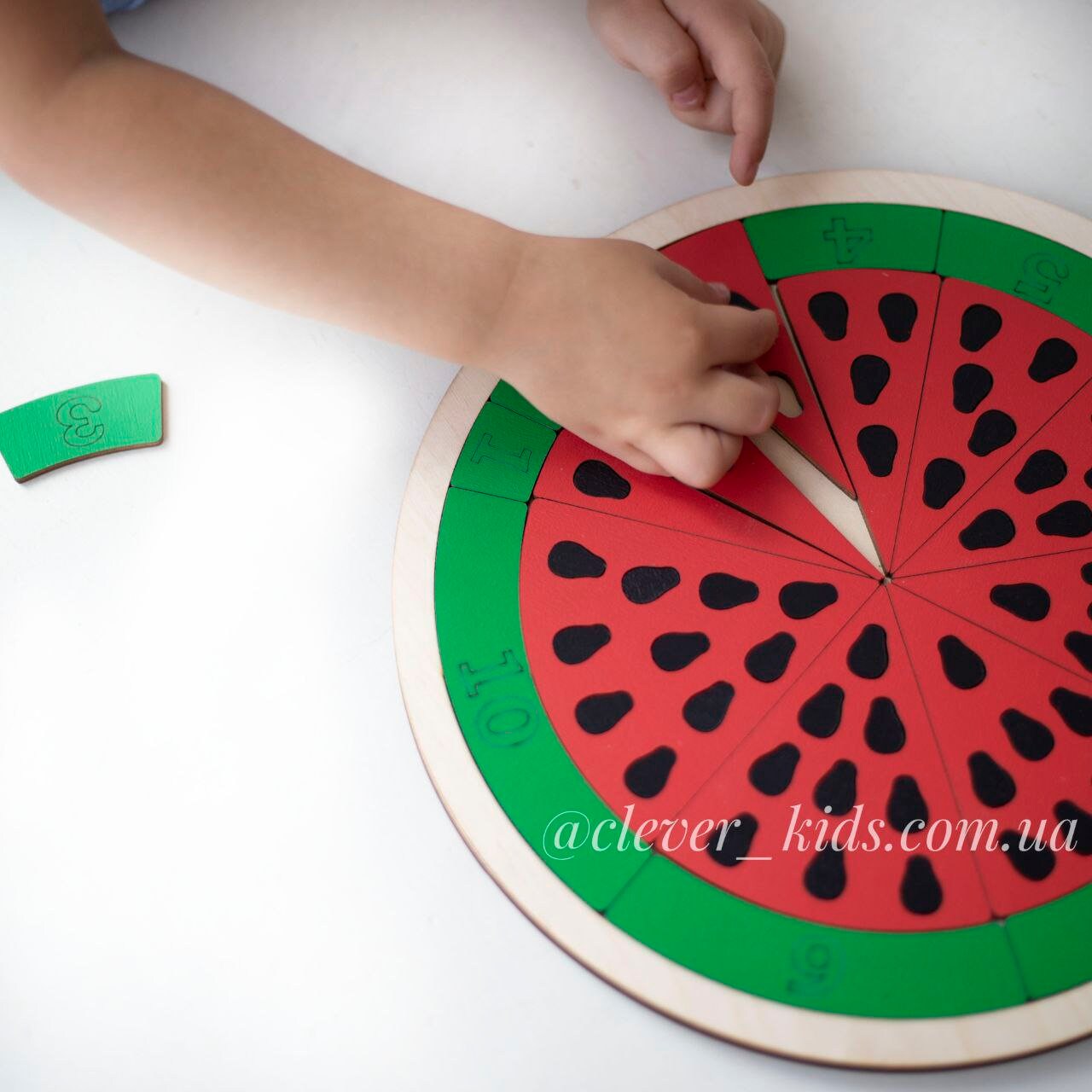
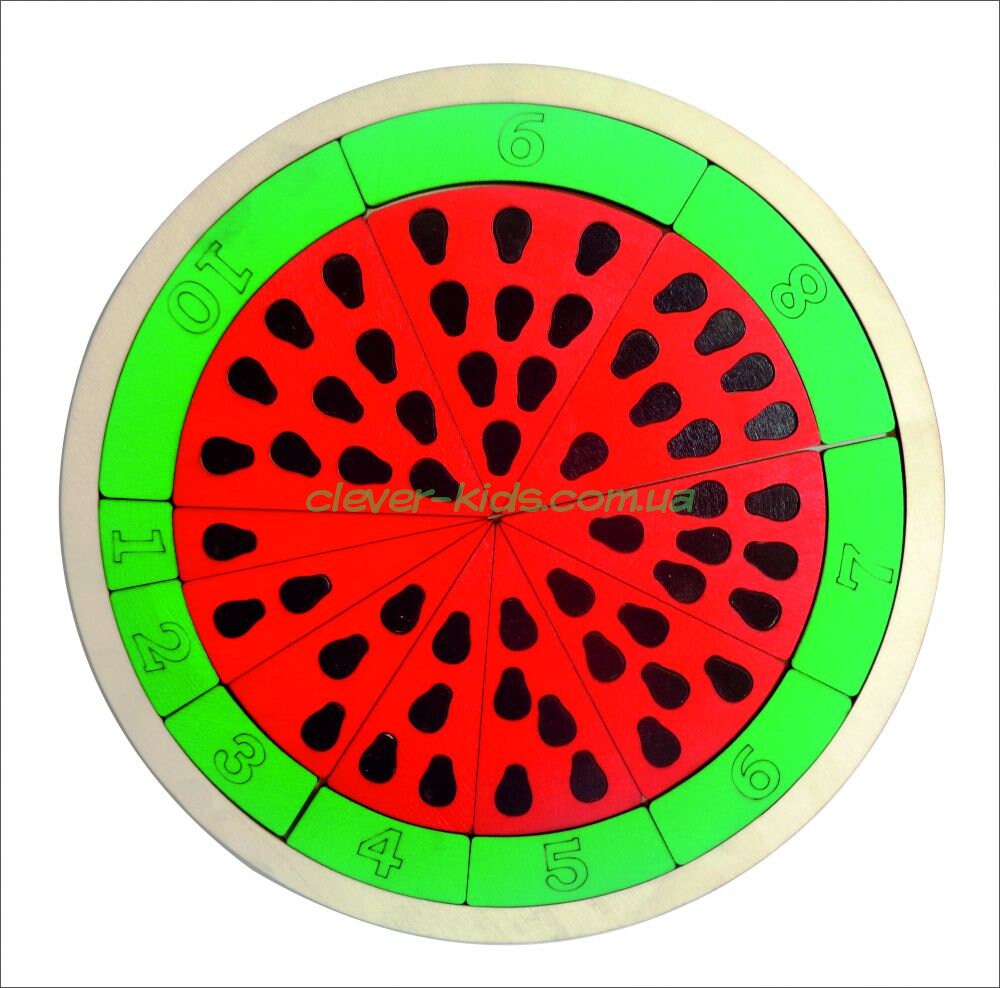
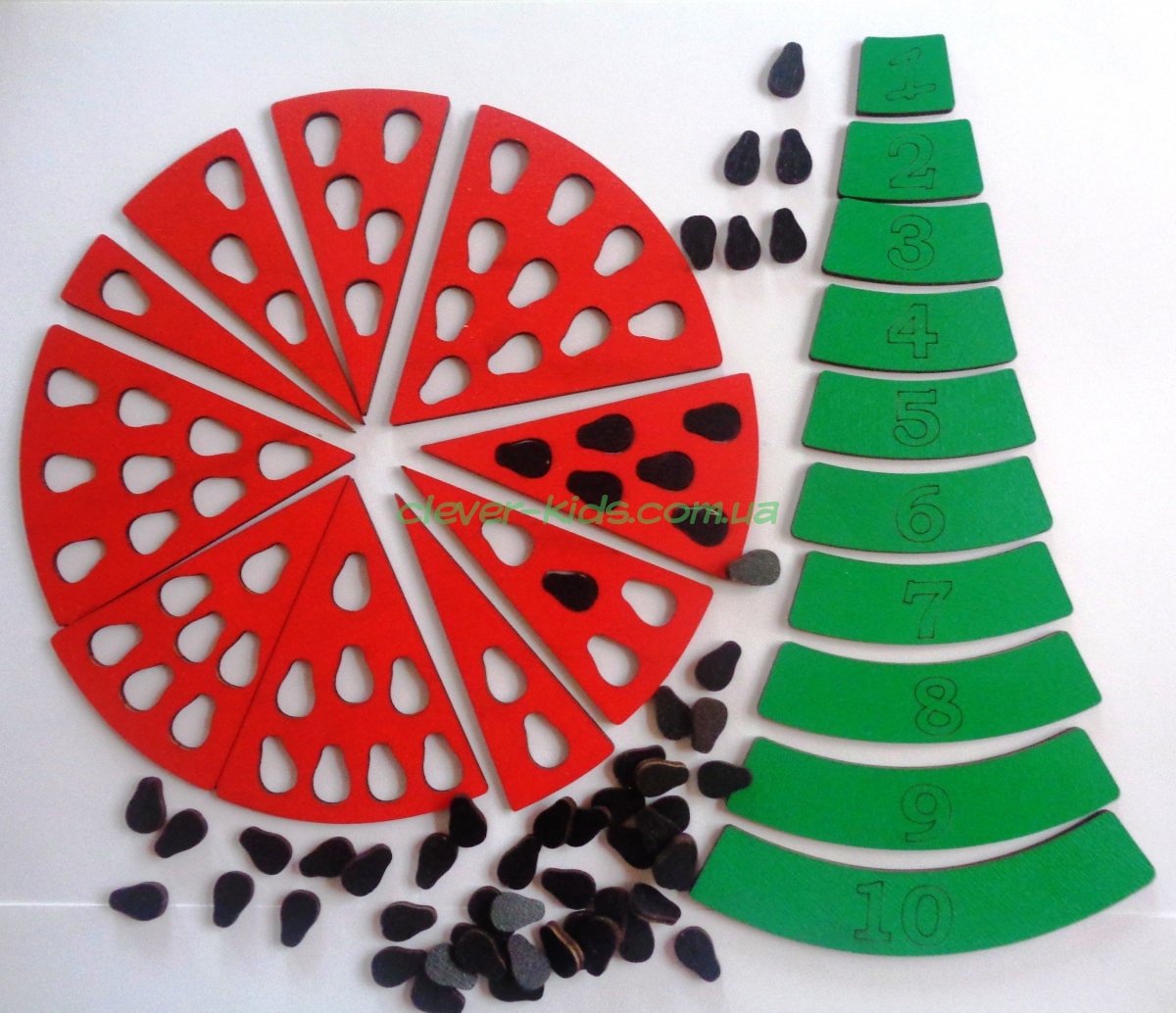
A plywood watermelon cut into wedges, with loose seeds and a set of number plates. The wedges differ in size, the seeds are countable, and the plates carry the numerals. Three separate things a child can line up against each other, which is more than most counting toys for toddlers offer.
The reason it works is that the quantity stays visible. A child who places five seeds on a wedge can look at the wedge and see five. When one seed is left over with nowhere to go, the error is in front of them rather than in an adult's correction, and they go back and recount without being asked. That loop is what turns reciting numbers into counting them.
Ways to use it with a child
- Order by size. Line the wedges up smallest to largest before any numbers appear. Comparing quantity starts with comparing size, and this is the easier version of the same idea.
- One seed, one count. Place seeds one at a time, saying one number per seed. Slower than feels natural. Rushing here is what produces a child who chants numbers without matching them to anything.
- Put the plates in order. Sequence the numerals on their own, away from the seeds, so the symbol and the quantity are learned as two separate things before being joined.
- Match plate to wedge. Give the numeral, let the child build the quantity. This is the direction that is harder and the one that matters.
- Name the neighbours. Point at a plate and ask what comes before and after. Knowing that six sits between five and seven is a different skill from counting to ten.
- Skip count. Arrange ten seeds as five rows of two. The visual grid is what makes counting by twos make sense rather than be memorised.
- Take one away. Remove a seed while the child watches and ask how many now, before letting them recount. Guessing first is where number sense shows itself.
What it develops
One-to-one correspondence, the understanding that the last number said is the answer to how many, and that a quantity holds steady whether the seeds are bunched or spread out. Alongside that: sequencing forwards and backwards, size and colour discrimination, and the pincer grip needed to place a small seed precisely. Special education rooms use tools like this with children at risk of dyscalculia because the concrete route into number is often the only one that opens.
Specifications
Play size 27.5 cm. Plywood with a non-toxic finish. Wedges, loose seeds and number plates included.
For adult-led work: ordering wedges by size suits a child from around 2, one-to-one counting from around 3, and neighbours and skip counting from around 4. Small loose seeds, so this is a tool for sessions with an adult, not a puzzle to leave out unattended.
Share